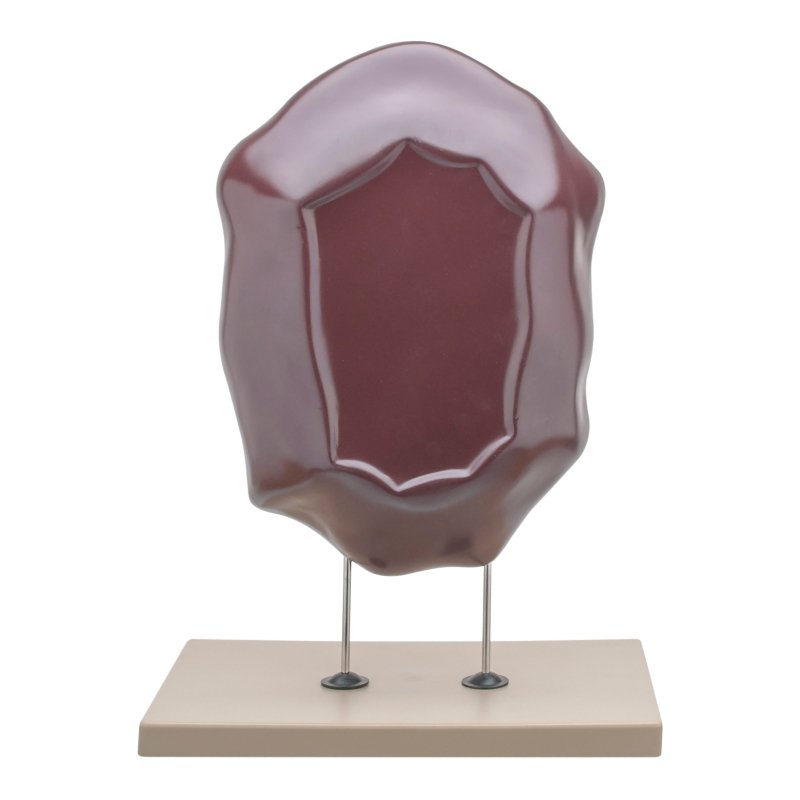
Animal Cell
ZM0002
Vendor: EISCO
Couldn't load pickup availability
- Fast Nationwide Delivery
- 100% Quality Guaranteed
- Reliable & Secure Payments
Have a question about this product?
Send us a message and we'll get back to you.
This model is a highly detailed, 20,000 times enlarged representation of an animal cell, showcasing its intricate internal structures and dynamic processes. It includes major organelles like the nucleus, endoplasmic reticulum, mitochondria, ribosomes (including polysomes), and the Golgi apparatus, along with centrioles, lysosomes, and fat vacuoles. Furthermore, the model vividly illustrates cell dynamics by depicting the extrusion of a Golgi vesicle and pinocytic activity. It is mounted on a base and comes with an English key card for easy identification of the various components.
Animal cells are characterized by several key features. They are eukaryotic, meaning they have a membrane-bound nucleus and other organelles. Unlike plant cells, animal cells lack a cell wall and chloroplasts, but they do possess a cell membrane, cytoplasm, and various organelles such as mitochondria, endoplasmic reticulum, Golgi apparatus, and lysosomes.
The model is approximately 38 x 24 x 46 cm in size and weighs about 2350 grams.
Cell Membrane: A flexible outer layer that controls the movement of substances in and out of the cell.
Nucleus: The control center of the cell, containing the genetic material (DNA) organized into chromosomes.
Cytoplasm: A jelly-like substance filling the cell where chemical reactions and other cellular processes occur.
Mitochondria: The "powerhouse" of the cell, responsible for generating energy through cellular respiration.
Endoplasmic Reticulum (ER): A network of membranes involved in protein and lipid synthesis. It comes in two forms: rough ER (with ribosomes) and smooth ER (without ribosomes).
Golgi Apparatus: Processes, packages, and distributes proteins and lipids.
Ribosomes: Sites of protein synthesis, they can be free-floating in the cytoplasm or attached to the rough ER.
Lysosomes: Contain enzymes that break down waste and cellular debris.
Vacuoles: Membrane-bound sacs that store nutrients, water, and waste products.
Centrosomes: Involved in cell division.
These components work together to maintain the cell's structure, carry out essential functions like respiration and protein synthesis, and regulate the cell's internal environment.
Clear Identification: A numbered key card is provided, enabling users to easily identify and learn the names of different anatomical structures.
Quality Construction: It is crafted by subject matter experts and features vibrant, hand-painted details with eco-friendly paint.