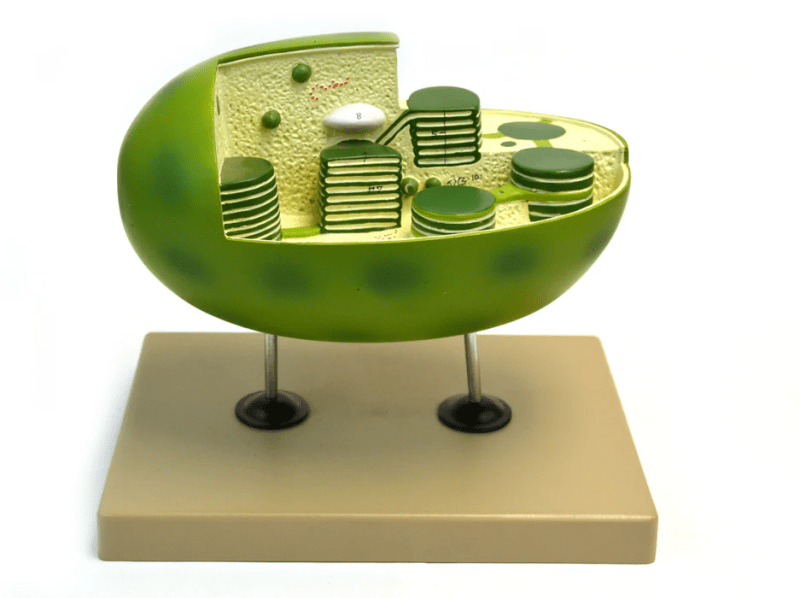
Chloroplast Model with cut away section to reveal internal structures
BM62AS
Vendor: SmartLabs
Couldn't load pickup availability
- Fast Nationwide Delivery
- 100% Quality Guaranteed
- Reliable & Secure Payments
Have a question about this product?
Send us a message and we'll get back to you.
A detailed 3D model of a chloroplast, with its vibrantly colored internal structures, is a valuable tool for studying the structure and function of this key plant cell organelle. The model highlights features like the outer and inner membranes, stroma, thylakoids, grana, lamellae, lumen, ribosomes, DNA, and starch granules, making it easier to understand their roles in photosynthesis.
The 3D model allows for a visual and kinesthetic understanding of how these structures are interconnected and how they contribute to the overall function of the chloroplast, which is the site of photosynthesis in plant cells.
Outer and Inner Membranes: These form the chloroplast's envelope, separating the internal components from the cytoplasm.
Stroma: This is the fluid-filled space inside the inner membrane, containing enzymes for carbon fixation during photosynthesis.
Thylakoids: These are flattened, sac-like structures within the stroma, often stacked into grana.
Grana: These are stacks of thylakoids, and they are the sites where light-dependent reactions of photosynthesis occur.
Lamellae: These are membrane structures that connect the grana, providing support and facilitating communication between them.
Lumen: This is the space inside the thylakoids, where some steps of photosynthesis take place.
Ribosomes: These are involved in protein synthesis within the chloroplast.
DNA: Chloroplasts have their own DNA, suggesting an endosymbiotic origin.
Starch Granule: This is a storage site for starch, a carbohydrate produced during photosynthesis.