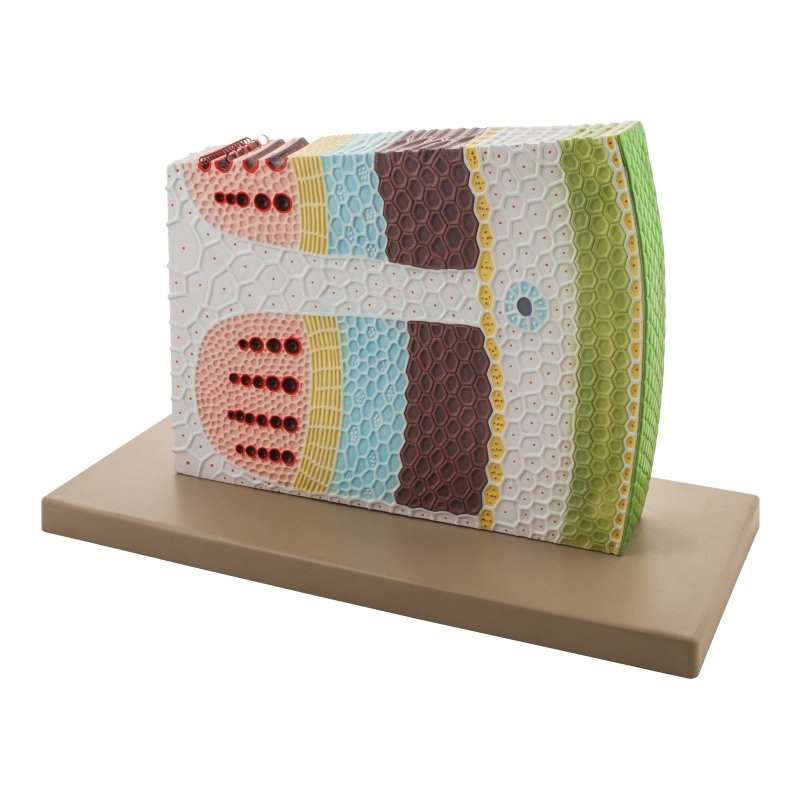
Dicot Stem Model, Three Dimensional, Transverse and Longitudinal Section View
BM0010
Vendor: EISCO
Low stock! Only 1 left
Regular price
R 2,850.00
Sale price
R 2,850.00
Regular price
Unit price
per
Tax included.
Shipping calculated at checkout.
Couldn't load pickup availability
- Fast Nationwide Delivery
- 100% Quality Guaranteed
- Reliable & Secure Payments
Have a question about this product?
Send us a message and we'll get back to you.
This dicot stem model is a detailed 3D section of a dicot stem, with both transverse and longitudinal views, for studying the structure and function of the stem. The features are coloured and numbered for comparison with the key that is included, and the model is mounted on a sturdy ABS plastic base for display. It is hand-painted in eco-friendly paint.
Details identified: cuticle, epidermis, hypoepidermis, middle cortex, endodermis, oil duct, pericycle, phloem, cambium, meta and proto xylem, xylem parenchyma, medullary ray and pith.
- Cuticle: a waxy layer on the outer surface of the epidermis that protects the stem and reduces water loss
- Epidermis: the outermost layer of cells, a protective barrier
- Hypoepidermis: a layer beneath the epidermis, sometimes consisting of sclerenchyma cells for support
- Middle cortex: the region between the epidermis and the vascular tissue, often containing parenchyma cells for storage and support
- Endodermis: a layer surrounding the vascular tissue that regulates the movement of substances
- Oil duct: a specialized structure for storing and secreting oils
- Pericycle: a layer of cells within the vascular cylinder, often involved in the formation of lateral roots and secondary growth
- Phloem: vascular tissue that transports sugars and other organic compounds throughout the plant
- Cambium: a layer of meristematic tissue (vascular cambium) that produces new xylem and phloem cells for secondary growth
- Meta and proto xylem: different types of xylem, with metaxylem developing later than protoxylem and typically having wider vessels
- Xylem parenchyma: living cells within the xylem tissue, involved in storage and other functions
- Medullary ray: cells extending radially from the pith to the cortex, for lateral transport
- Pith: the central region of the stem, composed of parenchyma cells and often involved in storage