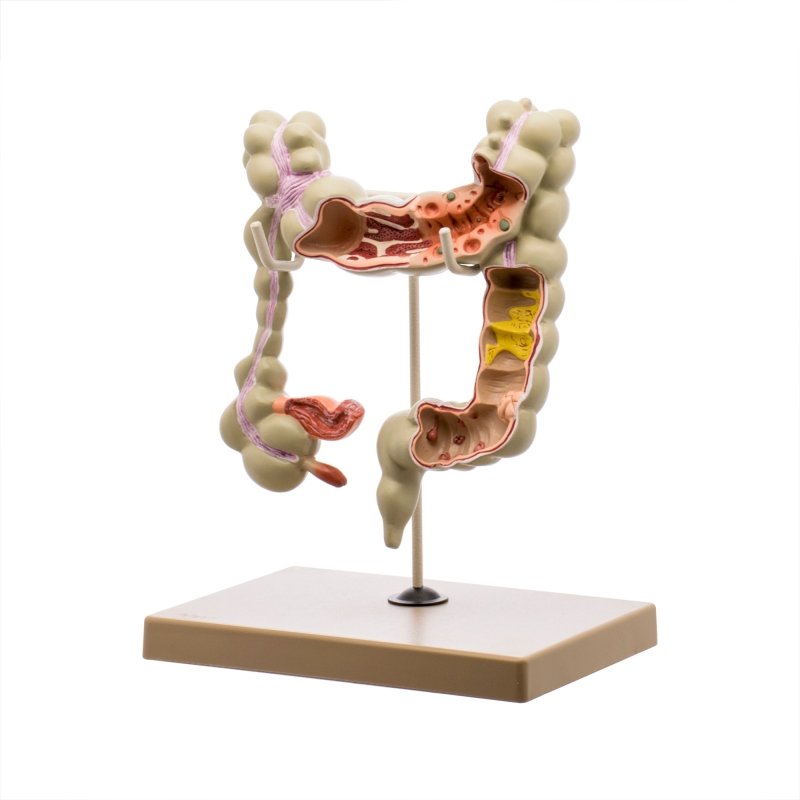
Colon Human Model
AM16049
Vendor: SmartLabs
Couldn't load pickup availability
- Fast Nationwide Delivery
- 100% Quality Guaranteed
- Reliable & Secure Payments
Sorry, it's out of stock.
But we can let you know when it's back in.
Have a question about this product?
Send us a message and we'll get back to you.
The Human Colon Model is an anatomical representation of the human colon that aims to mimic its structure and/or function for research and educational purposes. These models can be used to study the colon's anatomy, the large intestines shows the anatomy as well as several common diseases and conditions.
The colon is cross-sectioned to show colitis, appendicitis, adhesions, diverticulitis, diverticulosis, bacterial infection, cancer, spastic colon, and polyps. Crohn’s disease is shown in an area of the small intestines. The appendix and rectum are also shown.
A cross-section of the colon, also known as the large intestine, reveals its internal structure, which includes the mucosa, submucosa, muscularis externa, and serosa. The colon is a muscular tube that extends from the cecum to the rectum and is characterized by its folds, haustra (pouches), and epiploic appendages (fatty tags).
Understanding the cross-sectional anatomy of the colon is crucial for diagnosing and treating various conditions, including inflammatory bowel disease, diverticulitis, and colorectal cancer.
Size 33 x 26 x 36 cm approx. Weight 1345 g approx.
Mucosa: The innermost layer, containing the lining epithelium, lamina propria, and muscularis mucosae.
Submucosa: A layer of connective tissue beneath the mucosa, containing blood vessels, nerves, and lymphatic vessels.
Muscularis Externa: A muscular layer responsible for peristalsis (movement of contents through the colon), composed of inner circular and outer longitudinal muscle layers.
Serosa: The outermost layer, a thin membrane that covers the colon.
Key features visible in a cross-section:
- Haustra: Sacculations or pouches that give the colon its segmented appearance.
- Epiploic appendages: Small, fatty pouches attached to the outer surface of the colon.
- Taeniae coli: Three longitudinal bands of muscle that run the length of the colon.
- Crypts: Tubular glands in the mucosa that secrete mucus and absorb water.
Educational Tool: This model is intended for educational use, particularly in biology and medical training, providing a hands-on learning experience with a detailed anatomical representation.
Key Card: Supplied with a English key card to identify the numbered structures, making the model a valuable asset for interactive educational purpose.
Hand-painted: The model is hand-painted, which allows for accurate coloring and detailing.