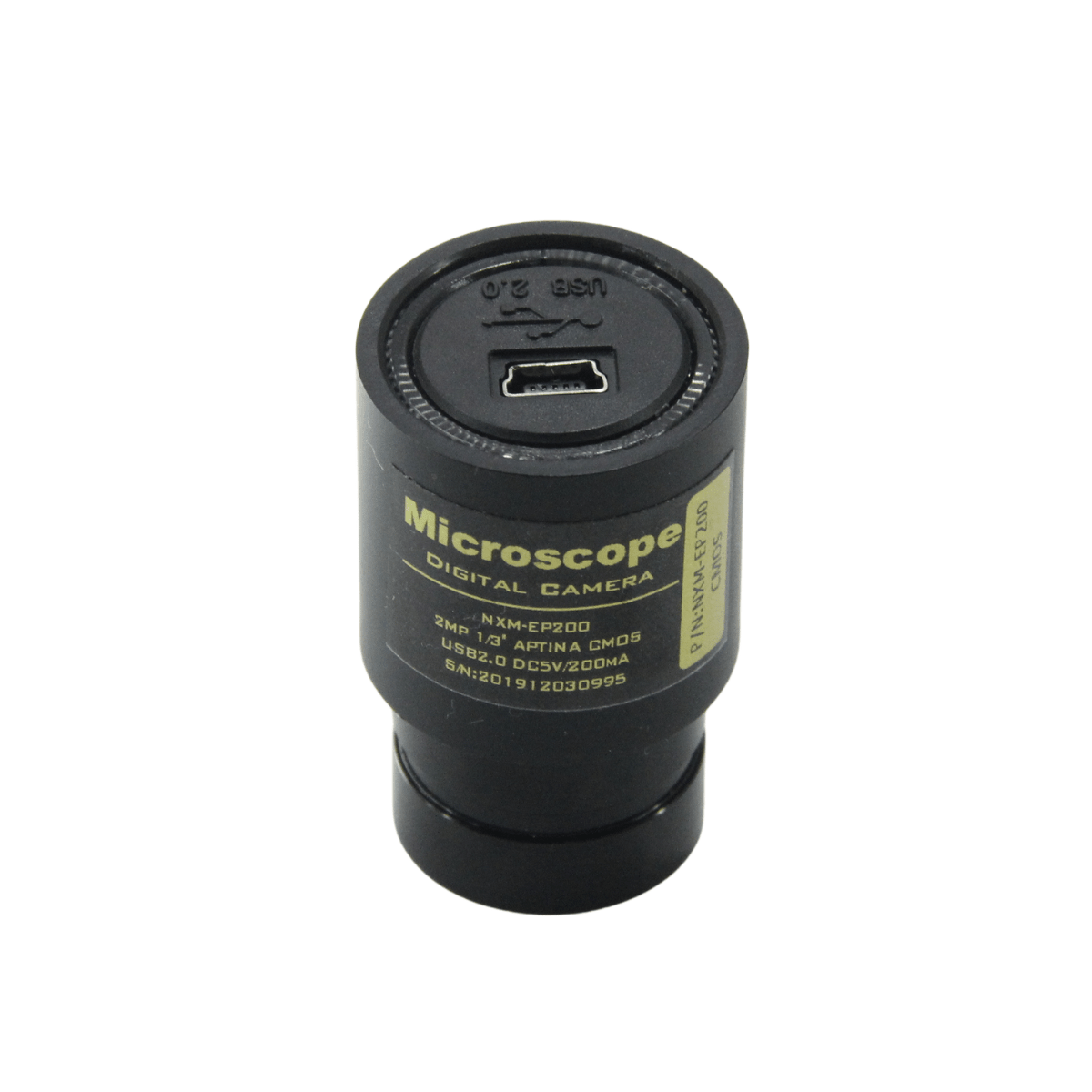
Digital Eyepiece Camera - USB2.0, Dia. 23.2mm Eyepiece Tube
NM-59.2205-E-2.0M
Vendor: SmartLabs
Couldn't load pickup availability
- Fast Nationwide Delivery
- 100% Quality Guaranteed
- Reliable & Secure Payments
Have a question about this product?
Send us a message and we'll get back to you.
This digital eyepiece camera (USB 2.0) fits a 23.2mm eyepiece tube and turns a standard microscope into a digital workstation. It's an affordable, driver-free way to convert biological, stereo or student microscopes to digital. With a 2.0 megapixel CMOS sensor and two adapter rings, this plug-and-play camera lets teachers, students and lab technicians capture Full HD images and stream smooth live video straight to a computer.
Specifications
- 2.0MP Full HD resolution: A 1/3.2" CMOS sensor outputs sharp 1920 x 1080 Full HD images of your specimens.
- Plug-and-play USB 2.0: Connects to a laptop or desktop PC over standard USB 2.0 for instant, driver-free streaming, much like a webcam.
- 23.2mm barrel: Slides straight into standard 23.2mm eyepiece tubes found on most compound and student microscopes.
- Two adapter rings included: 30.0mm and 30.5mm rings let you fit the camera to larger-tube stereo microscopes or inspection equipment.
- Imaging software: Works with video and analysis software for Windows to capture stills, record video, take measurements and adjust white balance and exposure as you go.
- Product of China
Recommended Applications
- Projecting live cell samples or chemical reactions onto a classroom projector or screen for interactive teaching.
- Saving high-resolution microscope images to school networks or lab reports.
- Upgrading existing monocular or binocular microscopes to digital without buying new microscopes.
Warranty and Repair
Every digital microscope camera includes a one-year manufacturer warranty from the date of purchase. This is a return-and-repair warranty: the manufacturer will repair any covered defects in materials or workmanship. If the technical team finds a returned unit can't be repaired, a replacement unit or another solution will be provided under the same one-year warranty.
Please note that the warranty doesn't cover the cost of returning the camera. Customers are responsible for all shipping, freight and insurance costs to get the unit to the repair facility.
The warranty covers normal operating defects and excludes:
- Accidental drop damage: Physical damage caused by drops, falls or careless transport.