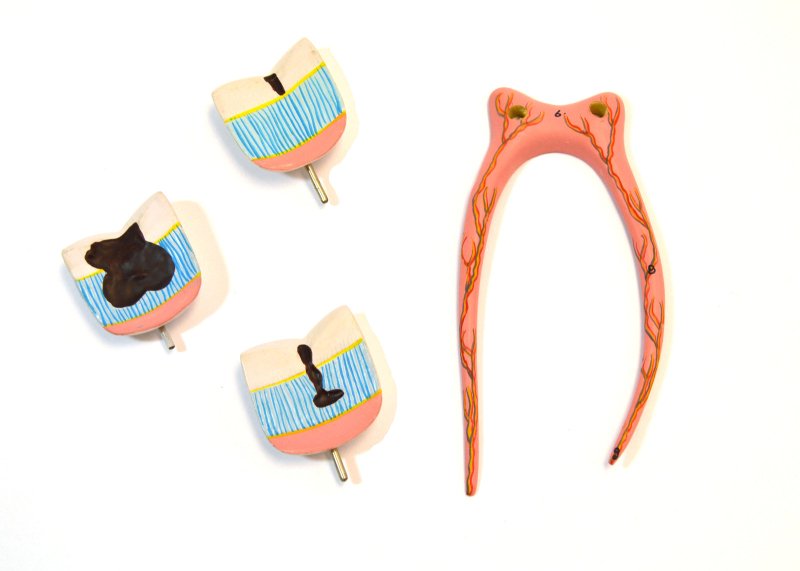
Human Upper Triple Root Molar with interchangeable cavities - 6 parts
AM0048
Vendor: EISCO
Couldn't load pickup availability
- Fast Nationwide Delivery
- 100% Quality Guaranteed
- Reliable & Secure Payments
Have a question about this product?
Send us a message and we'll get back to you.
Human Upper Triple Root Molar with interchangeable cavities. Longitudinal section through crown, 3 roots and pulp cavity. Removable tooth inserts with different stages of advanced cavities.
A human upper triple root molar refers to the typical configuration of the first and second molars in the upper jaw (maxilla), each having three distinct roots. These roots are typically named the mesiobuccal, distobuccal, and palatal (or lingual) roots.
- Human Upper Triple Root Molar 6 parts on stand
- Longitudinal section through crown, 2 Roots, and pulp cavity to show tooth internals
- Removable tooth inserts with different stages of advanced cavities.
- Measures 21cm tall On a 12.5cm x 12.55cm stand
- Hand painted Model with details and identification numbers
- 8 times life size
- Mesiobuccal root: Located towards the cheek and the front of the mouth.
- Distobuccal root: Located towards the cheek and the back of the mouth.
- Palatal (or lingual) root: Located towards the palate (roof of the mouth) and is typically the largest of the three.
A cavity in the pulp cavity, also known as pulpitis, occurs when tooth decay progresses and reaches the soft inner tissue of the tooth, called the pulp, which contains nerves and blood vessels. This can cause pain, sensitivity, and inflammation, potentially leading to a tooth abscess if left untreated.
Variations: While three roots are typical for the first and second upper molars, the third molar (wisdom tooth) may exhibit variations, sometimes having fused or fewer roots.Key Card: Supplied with a English key card to identify the numbered structures, making the model a valuable asset for interactive educational purpose.
Anatomy Education: These models are valuable tools for teaching and learning about the anatomy of the human teeth in medical schools, biology classes, and other educational settings.
Hand-painted: The model is hand-painted, which allows for accurate coloring and detailing.