Scale Kitchen 5kg/1g
DKS-05A
Vendor: SmartLabs
Couldn't load pickup availability
- Fast Nationwide Delivery
- 100% Quality Guaranteed
- Reliable & Secure Payments
Have a question about this product?
Send us a message and we'll get back to you.
This 5kg kitchen scale reads in 1g steps and has a stainless steel platform, which makes it handy for accurate baking, portion control and weighing parcels. In a school science lab, a digital kitchen scale is often used as a budget-friendly, durable alternative to an expensive precision balance. It doesn't have the fine readability needed for advanced university research, but its 1g readability is fine for general school science (like introductory chemistry, physics and biology).
Features
- Ultra-slim digital kitchen scale with a sleek stainless steel weighing surface
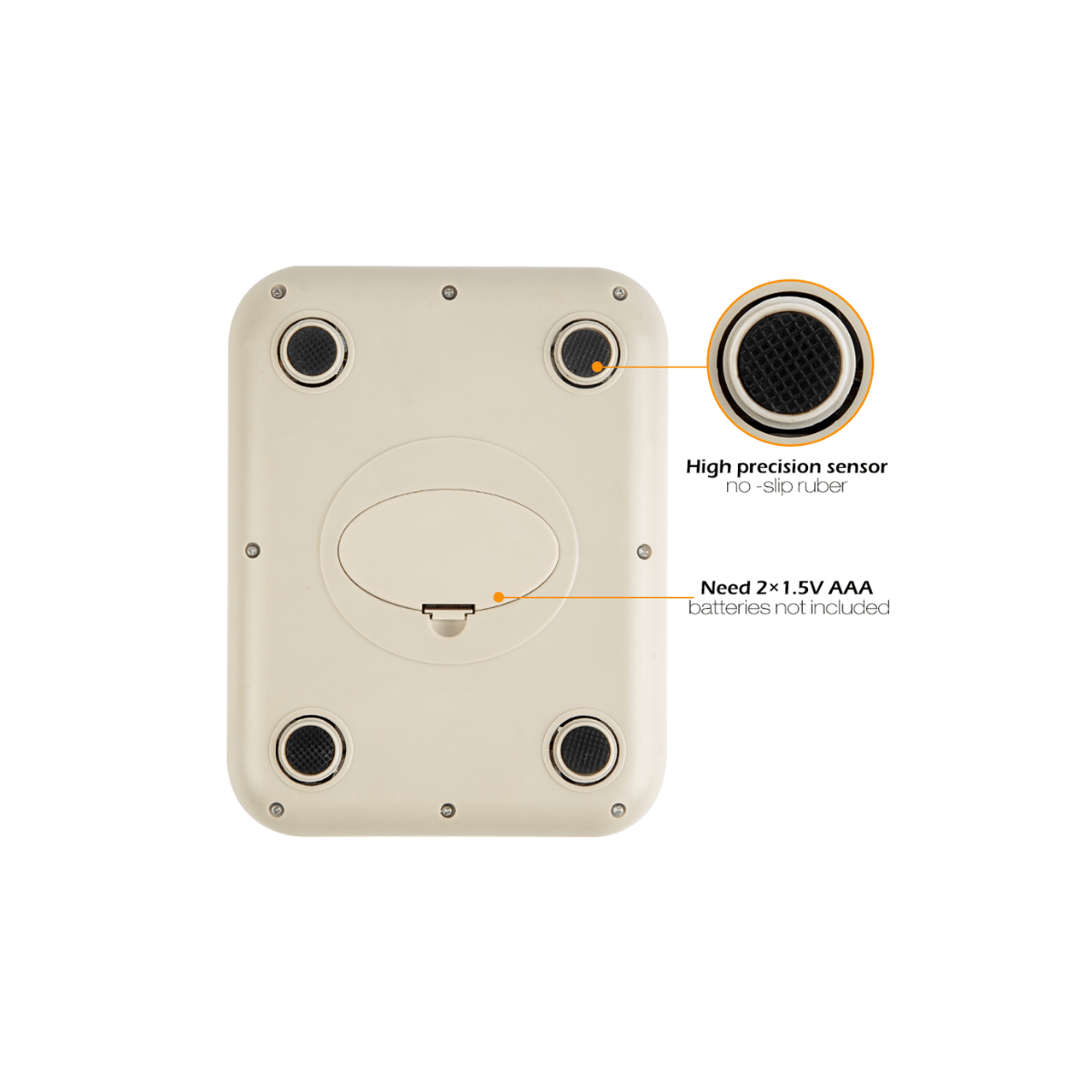
- High-precision sensor
- Weighing range 5000g, readability 1g
- Division value 1g
- LCD display with white digits on a dark background
- Automatic zero tracking
- Automatic switch-off
- Overload warning
- Unit conversion (g / ozt / lb / oz)
- Easy-to-clean stainless steel weighing surface
Specifications
- Material: Stainless steel
- Dimensions: 17.8 x 13.7 x 1.4cm
- Capacity: 11lb / 5000g
- Readability: 1g / 0.05oz
- Display modes: lb:oz, g, ozt
- Platform: 13.5 x 13.5cm (5.3 x 5.3 inch)
- Colour: Silver
- Power: 2 x AAA
In the box:
- 1 x kitchen scale
Is this a laboratory scale?
No. This digital kitchen scale is a consumer appliance designed for food preparation, portion tracking and basic home or small-business postal weighing.
Precision and Readability
- Kitchen scale: Usually reads in 1g steps (or 0.1oz). That's fine for baking ingredients but too coarse for precise scientific work.
- Laboratory scale (precision or analytical balance): Usually reads to the nearest 0.1g, 0.01g or even 0.0001g (0.1mg). That level of accuracy matters when measuring reactive chemicals, pharmaceutical compounds or micro-formulations.
That said, schools often use a kitchen scale like this for general science work. Here's how:
1. General Chemistry and Reagent Preparation
- Weighing bulk reactants: Students weigh out non-hazardous bulk solids (like sodium chloride, baking soda or copper sulphate) when making general solutions.
- Using the tare function: It teaches the standard lab technique of taring. Students put a weigh boat or beaker on the scale, press tare/zero to cancel its weight, and then measure only the substance they add.
2. Physics and Earth Science Experiments
- Calculating density: Students find the mass (in grams) of irregular solids, such as rocks, mineral samples or metal blocks, then divide it by the volume found by water displacement to get density (D = m/V).
- Conservation of mass: Weighing closed setups (like a sealed glow stick or a vinegar-and-baking-soda balloon bottle) before and after a reaction shows that the total mass doesn't change.
3. Biology and Environmental Studies
- Biomass and plant growth: Students weigh soil, pots or growing plants over several weeks to track water retention, evaporation or growth.
- Agar preparation: Measuring bulk nutrient agar powder and distilled water when preparing Petri dishes for bacteria experiments.
4. Safety and Cost
- Classroom durability: Kitchen scales usually have wipe-clean stainless steel surfaces and robust load cells, so they survive drops, heavy loads and spills far better than delicate analytical balances.
- Affordability: Because they're inexpensive, a school can put a scale on every student bench instead of making the whole class queue for one lab balance.