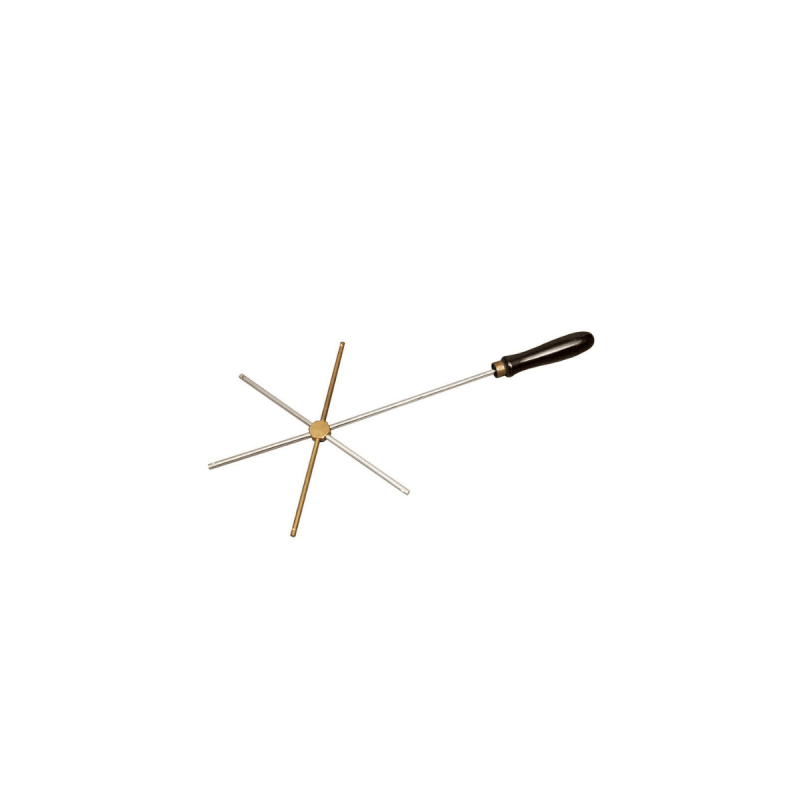
Conductometer
JN-PH0377
Vendor: JOANLAB
Couldn't load pickup availability
- Fast Nationwide Delivery
- 100% Quality Guaranteed
- Reliable & Secure Payments
Sorry, it's out of stock.
But we can let you know when it's back in.
Have a question about this product?
Send us a message and we'll get back to you.
This conductometer is a physics apparatus for comparing the thermal conductivity of different metals. It has metal spokes (aluminium, brass, iron, nickel and copper) radiating from a central hub, so students can see which metal conducts heat fastest.
Thermal Conductivity of Metals
- Objective: To compare how quickly heat travels through different metals.
-
Procedure:
- Place a small piece of wax or a match head in the indentation at the end of each spoke.
- Hold the central hub over a Bunsen burner flame.
- Watch the order in which the wax melts or the match heads ignite.
- Typical result: Copper usually conducts heat the fastest, followed by aluminium, brass and iron.
Not to Be Confused With
In chemistry, the word "conductometer" is also used for a conductivity meter, which measures how well a solution conducts electricity (for example testing tap water, distilled water, vinegar or salt solutions, or following a conductometric titration). This product is the physics version for heat conduction, not an electrical conductivity meter.