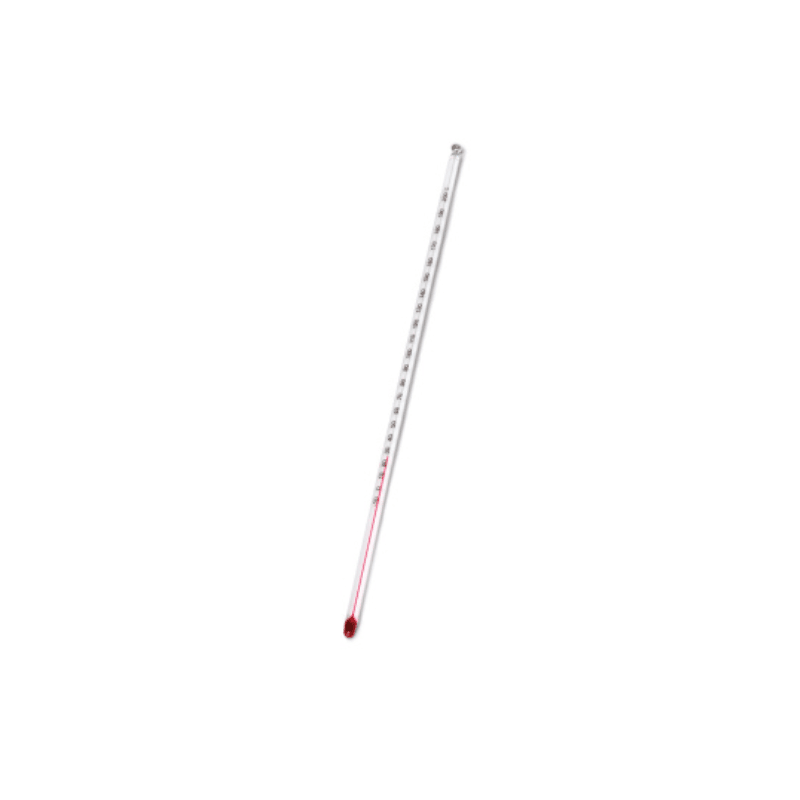
Educational Glass Thermometer with Hook -10 to 250C
CNY-GT-25
Vendor: SmartLabs
1128 in stock
Regular price
R 11.00
Sale price
R 11.00
Regular price
R 19.00
Unit price
per
Tax included.
Shipping calculated at checkout.
Couldn't load pickup availability
- Fast Nationwide Delivery
- 100% Quality Guaranteed
- Reliable & Secure Payments
Have a question about this product?
Send us a message and we'll get back to you.
Up to 42% off
This educational glass thermometer with a hook reads from -10°C to 250°C and is designed for accurate temperature monitoring in the lab. Its extended range makes it suitable for high-heat work as well as everyday experiments.
Key Features
- Range: -10°C to 250°C.
- Scale division: 1°C.
- Size: About 300mm long, 6mm diameter.
- Capillary: White-coated backing that makes the red liquid easy to see.
- Liquid: Red organic spirit (a non-toxic alternative to mercury).
- Immersion: Total immersion, so the thermometer must be submerged up to the level of the liquid column for accurate readings.
Safety and Care
- Non-toxic: The red spirit fill is safe for food or environmental labs where mercury isn't allowed.
- Rod shape: Robust, but needs a thermometer clamp to hold it securely in a flask or beaker.
Specifications
- Range: -10°C to 250°C
- Scale division: 1°C
- Size: 300mm x 6mm diameter
- Design: Rod-shaped general-purpose thermometer, white-coated capillary, red liquid, total immersion
- Brand: None
Classroom Uses
- Changes of state: Tracking water as it goes from ice to steam, to graph the latent heat plateaus.
- Exothermic reactions: Measuring the heat released when mixing vinegar and baking soda, or during "elephant toothpaste".
- Solar ovens: Testing DIY solar cookers. The 250°C range is handy here, as solar concentrators can get very hot.
- Distillation: Monitoring vapour temperature in a simple distillation to separate alcohol or essential oils from water.
Storage
- Store upright: Keep thermometers vertical, bulb down, so gravity stops the liquid column separating.
- Or at an angle: If upright storage isn't possible, store them at 15° or more. Never store them flat or bulb up, as this causes gaps in the red liquid.
- Stable temperature: Keep in a cool, dry place away from sunlight and heat sources, which can make the liquid expand and break the glass.
- Chemicals: Keep away from corrosive chemicals or vapours that could etch the glass or fade the scale.
- Check before use: Look for column separation (breaks in the red line).
- Fixing separation: Place the bulb in a cooling bath (ice and salt) to draw all the liquid into the bulb, then let it warm up slowly.
Because these thermometers use red spirit, not mercury, they're safe for school use. Always store them in their protective cases.