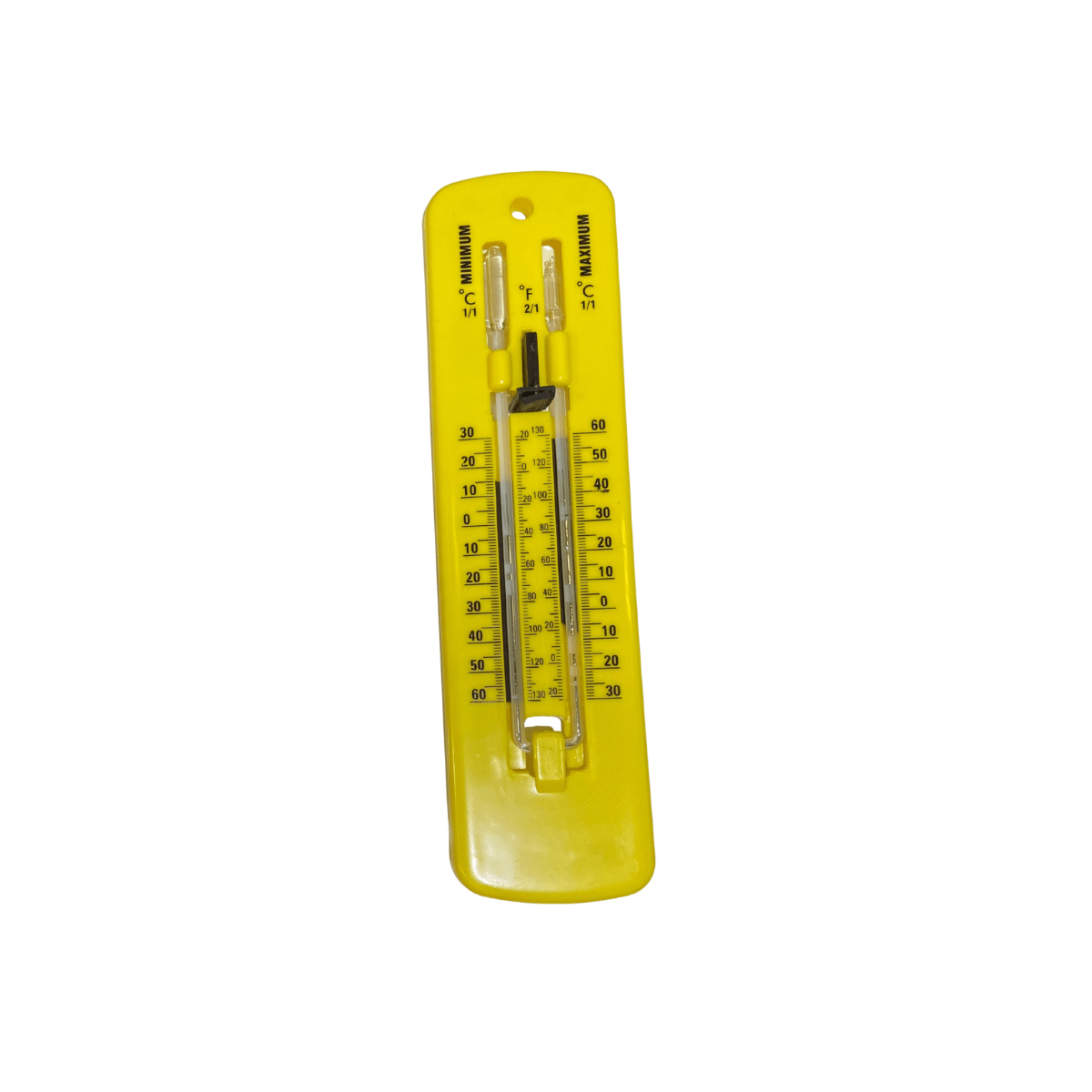
Max Min Thermometer
JN-IN-002
Vendor: SmartLabs
Couldn't load pickup availability
- Fast Nationwide Delivery
- 100% Quality Guaranteed
- Reliable & Secure Payments
Sorry, it's out of stock.
But we can let you know when it's back in.
Have a question about this product?
Send us a message and we'll get back to you.
Traditional mercury-based maximum-minimum thermometers, historically known as Six's thermometers, are precision instruments that record temperature extremes without requiring a power source.
A bubble or separation in a mercury max-min thermometer is common and can usually be fixed by reuniting the liquid column. The most effective methods involve using cooling, tapping, or centrifugal force to push the mercury back together.
Centrifugal Force (The "Shake"):
Action: Grasp the thermometer near the top and swing it rapidly in a downward arc, stopping abruptly when it reaches a vertical position.
Precaution: Ensure there are no nearby objects you could strike. Some experts recommend placing the thermometer inside a plastic bottle or tube before spinning it to contain any glass if it breaks.
How It Works
The classic mercury max-min thermometer consists of a U-shaped glass tube containing mercury.
- Expansion & Contraction: A bulb at the top of one arm is filled with alcohol. As the temperature rises, this alcohol expands, pushing a column of mercury through the U-bend and up the "maximum" arm. When it cools, the alcohol contracts, and the mercury moves back up the "minimum" arm.
- Recording Extremes: Small steel indices (markers) rest on the surface of the mercury in both arms. The moving mercury pushes these markers to the highest and lowest points reached. When the mercury recedes, the markers remain at those extreme positions due to small springs or friction.
- Resetting: To start a new 24-hour recording period, you typically use a small magnet to slide the steel markers back down until they rest on the mercury surface again.
Advantages and Performance
- High Precision: Mercury expands in a highly linear and predictable fashion, providing more consistent results than alcohol-only analog thermometers.
- Durability: Unlike alcohol, mercury does not evaporate easily or "wet" the glass walls, which prevents calibration drift and ensures the column remains clean for decades.
- No Power Required: These are ideal for remote weather stations or greenhouses where electrical power is unavailable.
Safe Storage and Preparation
- If your thermometer is intact but no longer needed, follow these steps to store it safely until disposal:
- Primary Container: Keep the thermometer in its original protective case if available.
- Secondary Containment: Place the cased thermometer inside a larger, leak-proof plastic container with a tight-fitting lid, such as a plastic tub.
- Padding: Surround the device with kitty litter or oil-absorbent material to cushion it against shocks and help absorb mercury if it breaks.
- Labeling: Clearly label the outside of the container with "MERCURY - DO NOT OPEN".
- Location: Store the container in a well-ventilated, low-traffic area away from children and pets
What to Do If It Breaks
- If the glass breaks and mercury spills:Ventilate: Immediately open windows and doors, then leave the room for at least 15 minutes.
- Isolate: Keep people and pets away from the spill area to avoid tracking the mercury or inhaling vapours.
- No Vacuums: Never use a vacuum cleaner or broom; this breaks the mercury into smaller beads and vaporizes it into the air.
- Contain: Use stiff cardboard to push beads together and pick up small droplets with adhesive tape. Place all debris in a sealed, labeled plastic bag.