1
/
of
2
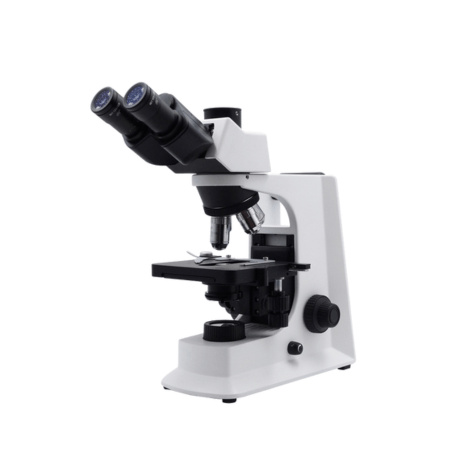
Laboratory Microscope Trinocular, Achromatic 4x10x40x100x
NM-12-2601-AT
Vendor: SmartLabs
Suited For: Lab and Research
Country of Origin: China
1 Year Warranty
Low stock! Only 2 left
Regular price
R 17,500.00
Sale price
R 17,500.00
Regular price
Unit price
/
per
Tax included.
Shipping calculated at checkout.
Couldn't load pickup availability
- Fast Nationwide Delivery
- 100% Quality Guaranteed
- Reliable & Secure Payments
Have a question about this product?
Send us a message and we'll get back to you.
Trinocular Laboratory Microscope
This Optical Compound Microscope is an Laboratory Microscope with full range of upgradable extensions. The Microscope is supplied with WF10X/20mm High Eyepoint eyepieces that magnify 10x, infinity E-Plan objective, double slide mechanical stage, coaxial coarse & fine focusing, abbe condenser N.A.1.25 with iris diaphragm, and 3W-LED illumination.
Available upgrades include Kohler Illumination, Dark Field Condenser, Polarizer and Analyzer Set, Phase Contrast or Fluorescence Unit Set.
- Observation Method: Bright Field
- Head: Seidentopf Trinocular Head, Inclined At 30 ° Interpupillary Distance 48-75mm
- Eyepiece: WF10X/20mm (High Eyepoint)
- Nosepiece: Quadruple, Backward
- Achromatic Objective:
- 4x/0.1, W.D.=18.6mm
- 10x/0.25, W.D.=6.5mm
- 40x/0.6(S), W.D.=0.47mm
- 100x/1.25(S,O), W.D.=0.07mm
- Total Magnification: 40x, 100x, 400x, 1000x (Oil)
- Focusing: Coaxial Coarse & Fine Focusing, Coarse Focusing Travel Range: 26mm, Fine
- Focusing Travel Range: Coarse Focusing Travel Range: 26mm, Fine Focusing Travel Range: 2µm
- Working Stage: Mechanical Stage Size: 145 mm × 140mm, Travel: 76mmX52mm, Scale: 0.1mm, Double Slide Holder
- Condenser: Abbe Condenser N.A.1.25, Iris Diaphragm, Rack & Pinion Up/Down, With Filter Holder
- Illumination: 3W-LED Illumination Systems
Downloads
- Download Product Data sheet
Specifications
Specifications
Optics
Observation: Bright field
Head: Seidentopf trinocular, inclined 30°, interpupillary distance 48-75 mm
Eyepieces: WF10x/20 mm, high eyepoint
Nosepiece: Quadruple, backward facing
Objectives: Achromatic 4x/0.1 (W.D. 18.6 mm), 10x/0.25 (W.D. 6.5 mm), 40x/0.6 spring (W.D. 0.47 mm), 100x/1.25 spring, oil (W.D. 0.07 mm)
Total magnification: 40x, 100x, 400x, 1000x (oil)
Stage and focus
Stage: Mechanical, 145 x 140 mm, travel 76 x 52 mm, 0.1 mm scale, double slide holder
Focus: Coaxial coarse (26 mm travel) and fine (2 µm)
Condenser: Abbe N.A. 1.25, iris diaphragm, rack and pinion, filter holder
Light
Illumination: 3 W LED
Upgrades available
Kohler illumination, dark field condenser, polariser and analyser set, phase contrast, fluorescence
Observation: Bright field
Head: Seidentopf trinocular, inclined 30°, interpupillary distance 48-75 mm
Eyepieces: WF10x/20 mm, high eyepoint
Nosepiece: Quadruple, backward facing
Objectives: Achromatic 4x/0.1 (W.D. 18.6 mm), 10x/0.25 (W.D. 6.5 mm), 40x/0.6 spring (W.D. 0.47 mm), 100x/1.25 spring, oil (W.D. 0.07 mm)
Total magnification: 40x, 100x, 400x, 1000x (oil)
Stage and focus
Stage: Mechanical, 145 x 140 mm, travel 76 x 52 mm, 0.1 mm scale, double slide holder
Focus: Coaxial coarse (26 mm travel) and fine (2 µm)
Condenser: Abbe N.A. 1.25, iris diaphragm, rack and pinion, filter holder
Light
Illumination: 3 W LED
Upgrades available
Kohler illumination, dark field condenser, polariser and analyser set, phase contrast, fluorescence
Common Uses
Common Uses
University and TVET Life Sciences/Biology laboratory benches
Image capture and sharing via camera port
Frequently Asked Questions
What can I connect to the camera port?
A microscope camera or an LCD screen, which lets a lecturer put a slide in front of a full class instead of queueing them past an eyepiece.
What is Kohler illumination and can I add it?
It's a lighting setup that spreads light evenly across the field, which matters for photography and phase contrast. It's one of the upgrades available for this microscope.
Why the 0.1 mm scale on the stage?
It lets you note the exact position of something on a slide and come back to it later, or work through a specimen in a grid without missing patches.