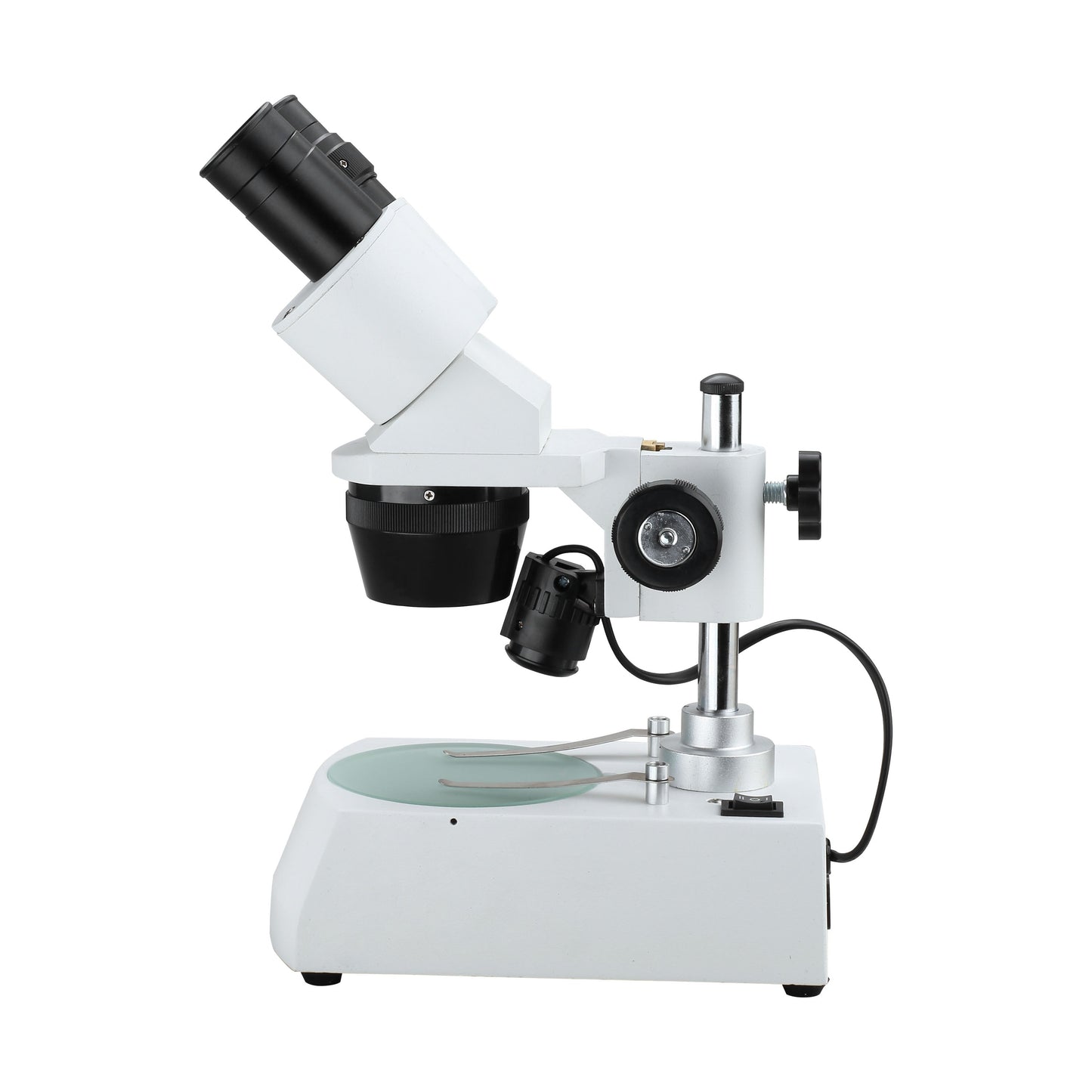
Microscope, Stereo Binocular 20-40x
601-171
Vendor: SmartLabs
Suited For: Lab and Research
Country of Origin: China
Couldn't load pickup availability
- Fast Nationwide Delivery
- 100% Quality Guaranteed
- Reliable & Secure Payments
Have a question about this product?
Send us a message and we'll get back to you.
Microscope, Stereo Binocular 20-40x
This binocular stereo microscope has 20x to 40x magnification and LED illumination.
A stereo microscope is ideal for observing or studying specimens that can't be placed on a microscope slide, or that need to be observed while being investigated or dissected. Clear plastic or glass petri dishes work well for viewing live or messy objects with a stereo microscope, since they fit well on the stage and keep everything contained. A few ways to use petri dishes with your stereo microscope: place the item or items in the bottom of the dish and position it on the stage plate, then use top or bottom lighting.
- Observe the habits of live insects.
- Study a shallow dish of pond water, daphnia, or brine shrimp.
- Examine a soil sample to see the different materials that make it up.
- Make a simple prepared slide of sand, hair, thread, salt, or something else by sticking it to a piece of clear tape and viewing it specimen side up.
- Dissect a flower to learn about the beauty and intricacies of all its parts.
- Compare the types of minerals and crystals in different rock specimens.
Specifications
- Objectives 2X and 4X
- Wide Field Plane-Scope Eyepiece WF10X
- Total Magnification: 20X-40X
- Articulated Free Binocular Head
- Interpupillary Distance 55-75mm, 45° Inclined
- Illumination Top & Bottom Light 1W LED
Specifications
Specifications
Common Uses
Common Uses
Frequently Asked Questions
What is a stereo microscope used for?
What is a stereo microscope used for?
Is 20-40x a zoom?
Is 20-40x a zoom?
How is it different from the 10-40x stereo microscope?
How is it different from the 10-40x stereo microscope?